GLP-1 Is Restructuring Grocery. Your Portfolio Does Not Know It Yet.
A weight-loss drug is now a demand signal, and it is reshaping the basket you sell into.
The short version
- A medication is now one of the biggest demand signals in grocery. About one in eight US adults is on a GLP-1 drug, double the share of eighteen months earlier, and the households using them already make up close to a quarter of all US households.12
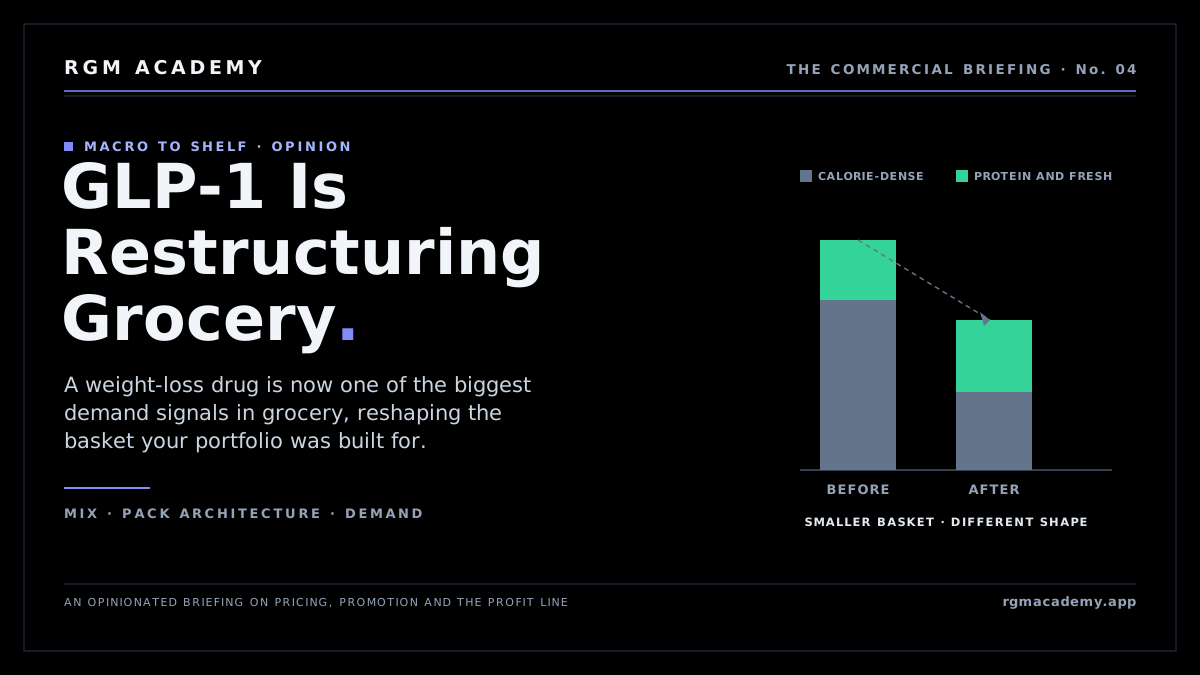
- These shoppers eat less, and they eat differently. A 150,000-household study found grocery spend down about 5 percent within six months of starting, and more than 8 percent for higher earners.4 The average hides a split: snacks, sweets, and fast food fall hardest while protein, yogurt, and fresh food rise.45
- The pack you spent years optimising is the wrong pack for this shopper. They want less food and more protein per bite, which breaks the old rule that the bigger pack is always the better deal.
- The mix damage compounds, because the categories losing volume, snacks and confectionery, are often the ones carrying your margin.
- The caveat: more than half of users stop within a year, and most find the drugs hard to afford,81 so this is not an overnight collapse. But the user base is still growing every quarter, and some of the changes outlast the prescription.
- My position: treat GLP-1 as a standing demand signal, not a fad. Map your portfolio's exposure, build a smaller protein-forward pack for the occasion you are about to lose, and rebias innovation and promotion toward the categories the trend is feeding.
A drug became a demand signal
For most of its history, grocery demand moved with income, weather, and price. It now moves with a prescription too. About one in eight US adults is taking a GLP-1 medication, the class that includes Ozempic, Wegovy, Mounjaro, and Zepbound, double the share of eighteen months before.1 Almost one in five has taken one at some point.1 The households using them already account for close to a quarter of all US households, and on one projection they will drive 35 percent of all US food and drink units sold by 2030.2
You do not have to believe that exact number to take it seriously. A force that touched a few percent of adults two years ago and a quarter of households now is not waiting for your next planning cycle. Walmart spotted it early in its own data, telling reporters that its GLP-1 shoppers were buying fewer units and slightly fewer calories than otherwise similar customers.3 It is already in your volumes, whether or not your category model has a line for it.
It does not hit the basket evenly
The headline is that these shoppers buy less. The commercial story sits underneath, in what they swap in.
The cleanest read comes from a peer-reviewed study run on a 150,000-household purchase panel, matched against who was actually starting the drugs.4 Within six months of starting, grocery spending fell about 5 percent, and more than 8 percent among higher-income households. Spending at fast food and other quick-service outlets fell about 8 percent. Underneath that, savory snacks dropped around 10 percent, with sweets and baked goods close behind, while yogurt, fresh fruit, nutrition bars, and meat snacks rose.4 A wider tracker put protein shakes up 38 percent and so-called superfoods up 58 percent among these households.5
So a calorie leaves the basket and a gram of protein takes its place. If your portfolio sits on the wrong side of that line, the category total you report will look like a soft patch when your heaviest-buying households are really just buying something else.
The pack you optimised is the wrong pack
This gets specific for anyone who manages a range. A GLP-1 user eats less at a sitting. The large sharing bag and the multipack, the formats built to win on price per gram, are exactly the ones this shopper no longer finishes. The rule that the bigger pack is always the better deal quietly stops holding.
Why the bigger pack stops winning
Pack architecture usually rewards size. A bigger pack costs less per gram, so the shopper who wants more pays less per unit and stays loyal to the format. That logic assumes the shopper is trying to maximise quantity. A GLP-1 user is not. They want enough, with more protein and fewer calories, in a pack they will actually finish. For them a smaller, denser pack is the better deal even at a higher price per gram.
It is already showing up on shelf. Conagra put a "GLP-1 Friendly" badge on more than two dozen Healthy Choice meals, built around portion control and protein.6 General Mills and others have pushed protein-forward versions of mainstream products. The move that works is not a health sub-brand bolted on the side. It is re-cutting the core range for an occasion that is changing shape.
The mix damage compounds
The reason this reaches the profit line, and not just the volume line, is which categories are losing. Snacks, confectionery, and indulgent frozen meals are often the margin-rich end of a food portfolio. They are also the categories the data shows falling hardest among GLP-1 households.4 One large advisory estimate puts up to 12 billion dollars of US snack sales at risk over the next decade, split fairly evenly between salty and sweet.7 Losing volume in your best-margin categories, to a buyer group that is growing, is a mix headwind that compounds quarter after quarter.
The mechanism is worth seeing in numbers, because it points straight at the fix.
Take a snack you sell as a 300 gram pack at 3.00, costing 1.80 to make. That is 1.20 of gross profit on a 40 percent margin. Your GLP-1 shopper now finds 300 grams too much and simply stops buying it. The occasion, and the 1.20, are gone. Now offer that same shopper a 150 gram, protein-forward pack at 2.10, costing 1.05. That is 1.05 of gross profit on a 50 percent margin. You have kept just under 90 percent of the profit on half the grams, at a higher margin, on an occasion you would otherwise have lost completely. The smaller pack is dearer per gram, and for this shopper that is fair, because they are paying for enough rather than for the most.
What could make this smaller
This is not an overnight collapse, and anyone selling it as one is overselling. More than half of the people who start a GLP-1 stop within a year, on the evidence of a large national study.8 Most users say the drugs are hard to afford.1 Those two facts are why Mondelez's chief executive has put the likely hit at 1 to 1.5 percent of volume over ten years, a rounding error next to the headlines.9 He may be right about the average.
Why a churning user base still moves your numbers
It feels reassuring that half of users quit within a year. But the base still grows when more people start than stop, and that is what is happening: each quarter there are more current users than the one before. Add the people who have used a GLP-1 and come off it, and the share of shoppers whose habits have been reset at least once is much larger than the current-user number. Some of that reset sticks even after the drug stops.
Two things cut against the comfortable reading. The installed base is still growing every quarter even with people dropping out, and almost one in five adults has now used one of these drugs at least once.1 And some of the change holds: produce and a few other categories stay elevated even after people come off the drug, and half of those who stop expect to go back on it.2 A churning user base is still a larger and differently shaped one each year.
What would I do on Monday?
Three moves. First, score your portfolio for exposure: which of your volume, and more to the point your profit, sits in the categories the data shows GLP-1 households cutting, and which sits in the ones they are feeding. Second, build the smaller, protein-dense pack for your most exposed line before you lose the occasion, and price it for value per nutrient, not value per gram. Third, rebias your innovation and your promotion toward the growing side, and stop pouring depth discounts into big calorie-dense packs aimed at a shopper who is, quietly, leaving.
A drug changed what your best customers want for dinner. That is not in anyone's elasticity model, and it does not need to be in a headline to already be in your numbers.
References
- KFF Health Tracking Poll, November 2025: about one in eight US adults (12 percent) currently take a GLP-1 drug, roughly double the 6 percent in KFF's poll eighteen months earlier; 18 percent have ever taken one; 56 percent of users find the drugs hard to afford. kff.org (May 2024 baseline, 6 percent: kff.org)
- Circana, GLP-1 medication users to represent 35 percent of US food and beverage sales by 2030, November 2025: GLP-1 households are about 23 percent of US households today; produce and some health categories stay elevated after discontinuation; half of former users expect to use again. globenewswire.com
- Walmart, reported October 2023: the retailer's US chief said GLP-1 shoppers were buying fewer units and slightly fewer calories than otherwise similar customers, based on anonymised pharmacy and spend data. nbcnews.com
- Hristakeva, Liaukonyte and Feler, Journal of Marketing Research, December 2025 (Cornell and Numerator, 150,000-household panel): grocery spending down about 5.3 percent within six months of GLP-1 adoption, over 8 percent for higher-income households; quick-service spending down about 8 percent; savory snacks down about 10 percent; yogurt, fresh fruit, nutrition bars and meat snacks up. sciencedaily.com
- Numerator GLP-1 Trends Hub, October 2025: among GLP-1 households, protein shakes up 38 percent and superfoods up 58 percent relative to comparable non-users; spending down about 10 percent across 100-plus categories for users with a 15-pound goal. globenewswire.com
- Conagra Brands, December 2024: a "GLP-1 Friendly" badge added to more than two dozen Healthy Choice meals, built around portion control and protein. fooddive.com
- EY-Parthenon analysis, February 2025: GLP-1 adoption could put up to 12 billion dollars of US snack-food market growth at risk, about 7 billion in salty snacks and 5 billion in sweet. ey.com
- Real-world discontinuation study presented at EASD 2025 (Danish national data, 77,310 adults): 52 percent of adults stopped semaglutide for weight loss within one year. medscape.com
- Mondelez chief executive, 2025 investor conference, reported in trade press: estimated GLP-1 medications would have a 1 to 1.5 percent impact on volume over ten years, citing access limits and high discontinuation. massmarketretailers.com
Keep going
Pair this with the decision guide and the lessons that drill the moves behind it.
Playbook
Price increase versus pack-size reduction. The decision guide behind the pack-reset move here: when to change the pack instead of the price, and how to hold margin while you do it.
More from the blog
The Consumer Came Back. They Came Back Different. The other demand split reshaping the same shelf, this one driven by income rather than a prescription.
The Squeezed Middle. What to do on the shelf when demand polarises: rebuild the range as a barbell.